





This section features the research work I supervise, like dissertations and theses. I am excited to celebrate my students’ accomplishments and share exemplary architectural research. This also gives you an idea about the research focus and range of topics I am concerned with supervising. Enjoy, and give proper credit to the authors and academic institutions when you use any part of their work.
The dissertation examined migration as a socio-spatial system in Agadez, while the thesis translated these findings into a spatial intervention at the Old Bus Station site, reimagining it as a dignified transit threshold.
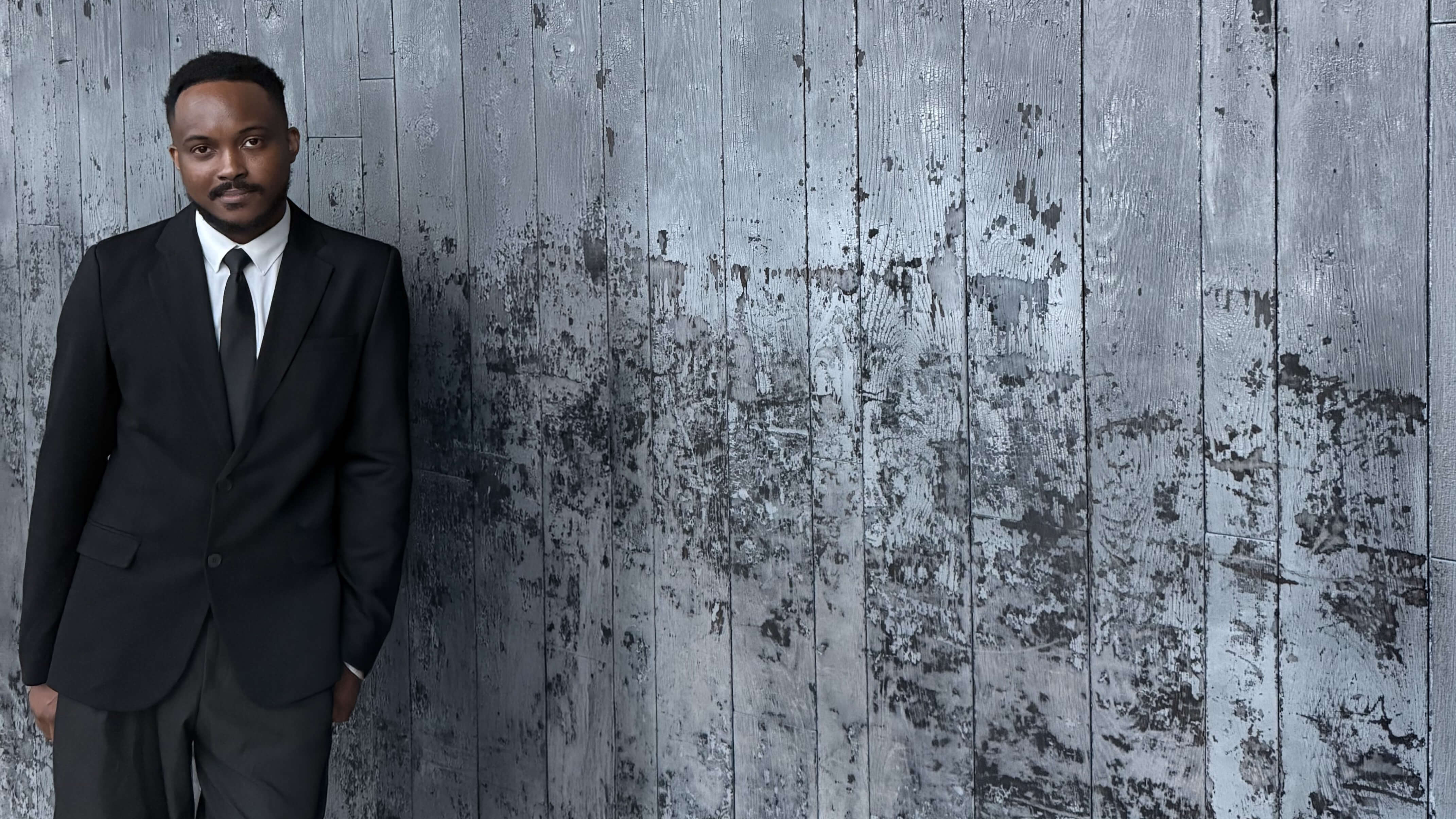
Kings, Part II Architectural Assistant, Ramboll Sustainability Award 2025
I completed my undergraduate architectural training in Nigeria before pursuing postgraduate studies in the United Kingdom. This progression enabled me to develop in two distinct architectural contexts, each of which spoke to my independence, critical academic inquiry, and measured design approach.
Alongside my academic studies, I gained early professional experience in designing and coordinating residential projects. Working with real clients early in my career strengthened my technical discipline, attention to detail, and ability to take responsibility for design decisions.
My postgraduate education broadened my approach to architecture, shifting my focus towards socially embedded and climate-responsive design. I became particularly interested in projects that demand technical rigour, environmental awareness, and clear structural logic.
I recently completed my MArch at the University of Salford, where my thesis was awarded the Ramboll Sustainability Award 2025 for its climate-responsive, socially grounded design. This recognition led to an opportunity to collaborate with Manchester’s progressive employee-owned practice, Buttress Architects, on heritage and community projects.
I have also enjoyed working with Studio Tim Fu, a leading London-based computational and AI-driven design practice, where I have gained experience in conceptual development and spatial articulation. I am currently consolidating my professional profile through continued portfolio development, technical refinement, and selective engagement with industry forums as I pursue the next stage of my practice.
My academic work and professional experience are united by a focus on climate-responsive, socially embedded architecture. I am particularly interested in projects that demand technical clarity, environmental intelligence, and careful integration of context. Alongside practice experience, mentorship within the field has provided ongoing critical guidance and professional perspective.
My dissertation examined the ad hoc socio-spatial dynamics of migration networks in Agadez, a key transit hub linking Sub-Saharan Africa to Europe. Drawing on AbdouMaliq Simone’s concept of “people as infrastructure,” it analysed how informal transit networks, temporary settlements, and transport systems function as architectural infrastructures. It also examined how migration policies—particularly Niger’s 2015 Anti-Smuggling Law—reshaped these spatial systems and altered the city’s urban morphology.
The thesis translated this research into a spatial design intervention at the Old Bus Station site in Agadez. Rather than formalising transit through rigid infrastructure, the project proposes a climate-responsive threshold that supports informal economies through shaded vaults, passive ventilation, water-harvesting systems, modular maami markets, hospitable transit spaces, and a minaret that serves as both a cultural landmark and an environmental device.
A key part of the research was rethinking architecture not only as buildings but as spaces of inhabitation in motion. I examined vehicles—tankers, vans, boats, and even ship rudders—as temporary architectural envelopes through which migrants inhabit and negotiate space. Tracing migration routes revealed how these mobile infrastructures function as spaces of survival, containment, and transition. This reframing helped me understand architecture as infrastructural and relational rather than static.
My design and research project was inspired by observing the persistent outward migration of young people from Edo State, Nigeria, who undertake risky trans-Saharan journeys. This led me to investigate the architectural and spatial infrastructures that shape migration. I used a qualitative approach grounded in critical policy analysis and spatial theory, drawing on secondary sources such as IOM data, EU migration policies, and ethnographic research. I also used spatial mapping and visual analysis to trace how migration infrastructures reshape urban morphology.
Working on this integrated design and research project expanded my understanding of the forces shaping architecture and urbanism. This research transformed my understanding of architecture, shifting it from designing isolated objects to seeing architecture as a system of support—sometimes fixed, other times mobile—embedded within infrastructures of movement, policy, and climate.
I began to view infrastructure, policy, climate, and human agency as spatial forces that architecture must engage with critically and ethically.
This interview was published on 15 April 2026.